

The feelings associated with living with addiction or mental health struggles can be hard to articulate. Creating art, even alone, has been shown to relieve stress, aid communication, and promote brain health to reduce cognitive decline.
Art therapy fills a gap where traditional talk therapy can’t always reach. It provides a different avenue. Through the visual arts, people can better express their feelings, create positive coping strategies, or simply describe things that they cannot put into words.
If more traditional approaches are falling short, art therapy may be exactly what is needed.
What Is Art Therapy for Addiction?
Art therapy for addiction is a structured form of therapy that uses the creative process, such as drawing, painting, sculpture, collage, or other activities, as a vehicle for emotional expression, self-exploration, and emotional healing.[1] In contrast to traditional therapy approaches such as counseling and psychotherapy, art therapy has a less clinical and more expressive environment, and is often used as an adjunct to those traditional approaches. In recent years, as these alternative therapeutic modalities are becoming increasingly accepted within the realm of mental health treatment, they have become more widely used as a means of recovering from substance use disorders.
Art therapy is not based on someone’s artistic ability or creativity, nor does it require anyone to be good at art — rather, it is designed to help clients express and process emotions that cannot be expressed through traditional forms of therapy. Clients have the option of engaging in either individual or group art therapy sessions based on their specific treatment plan and goals. Art therapy is appropriate across a variety of treatment settings, including inpatient, residential, partial hospitalization, and outpatient programs.
At All In Solutions, we take a holistic approach to treating substance use disorders and include art therapy as a part of clinical care, not in place of. Our art therapists collaborate with other members of the multidisciplinary treatment team to ensure that the artwork produced during art therapy sessions complements and enhances the client’s overall recovery process.
How Art Therapy Helps With Addiction Recovery
Reaching What Talk Therapy Can’t
Addiction is often rooted in experiences like trauma, unresolved grief, or low self-esteem, that are difficult or impossible to access through traditional forms of therapy. Many people in addiction recovery have histories of post-traumatic stress, childhood abuse and neglect, or other forms of psychological abuse. Art therapy gives these people a non-verbal path into this subject matter, allowing them to approach and process it from a safe distance.
This is particularly relevant for individuals with a history of trauma. Trauma is inherently difficult to verbalize. People with a history of trauma often remember their traumatic events through non-verbal forms of expression, such as fragmented memories and sensations. Art therapy allows individuals to reflect on their trauma and engage with the images or sensations created through the creative process in a way that may otherwise be impossible using only traditional types of therapy.
Building Self-Efficacy and a Sense of Control
Art therapy has been used to support self-esteem, self-awareness, and emotional resilience, which can help clients engage more fully in recovery.[2] These skills are crucial in building self-efficacy, which is the belief in one’s ability to control their own behavior, including substance use.
Self-efficacy is a well-established predictor of relapse — people who do not feel they can achieve sobriety are more likely to relapse.[3] By allowing clients to participate in art therapy, they can learn to feel empowered by their own creativity as well as their ability to control their behavior.
Processing Emotions Without Substances
At its core, addiction is often a coping mechanism for those who cannot manage their emotions any other way. Art therapy helps these clients to experience those difficult emotions by using creative materials instead of resorting to substances. As they create with different materials, they experience both physical and mental sensations simultaneously, producing a type of mind-body experience that coincides with the emotional recovery work being performed through traditional forms of therapy.
Reducing Shame and Resistance to Treatment
Shame is one of the strongest contributors to ongoing addiction and one of the largest barriers to engaging in treatment. Art therapy is designed to work around this, which can circumvent the defenses that are often triggered by verbal confrontation. It’s easier, in a sense. When an individual creates artwork about their experience, the artwork speaks for itself. There is less pressure to perform or defend themselves from judgment, and more space available to be honest. Reduced defensiveness provides an opportunity for true therapeutic progress.
Strengthening Relapse Prevention
Skills like emotional regulation, distress tolerance, self-awareness, and the ability to tolerate difficult emotions are associated with lower relapse risk because they help people manage stress, cravings, and triggers without returning to substance use.[4]
Art therapy can help build these skills by helping clients identify and understand their triggers in a concrete, visual way, as the abstract machinery of addiction becomes more readable and manageable. These are also the skills clients utilize beyond their formal treatment setting in aftercare and future recovery.
Art Therapy Techniques Used in Addiction Treatment
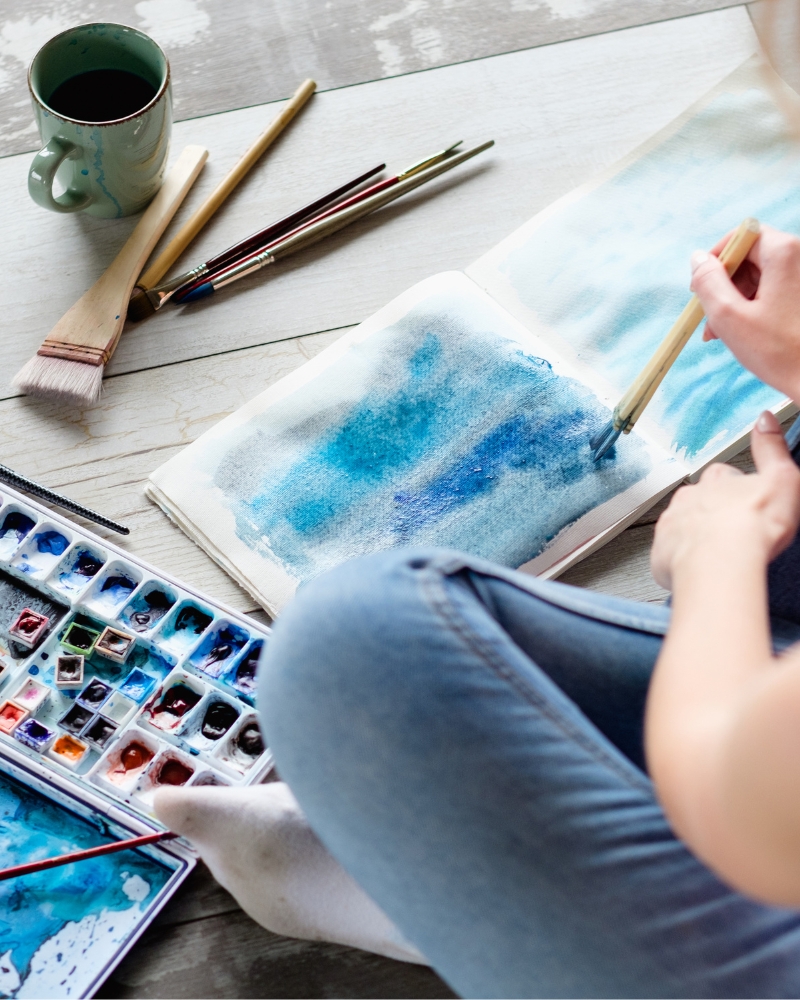
Art therapy can include a variety of different mediums and is usually adapted to the client’s needs, comfort level, and goals. Common activities include:
- Drawing and painting as a way to express deeply held feelings and emotions
- Sculpting with clay or other materials as a way to develop a sense of physical agency and strength
- Collaging as a way to develop a sense of identity and recovery goals
- Free-form expressive work that allows the client to access and project their experiences without any conscious direction
In addition, the group therapy format provides additional avenues for reducing isolation and enhancing group discussion in a way that complements traditional formats of group therapy. Artistic ability or prior experience with the arts is not required for any of these modalities. The benefit is from the process, not the finished product.
The Efficacy of Art Therapy in Addiction Treatment
While the body of evidence supporting art therapy as a treatment for substance abuse is large and growing, some of the primary clinical findings are outlined below.
Case studies suggest that art therapy is useful in building self-efficacy and reducing defensiveness to treatment.[5] In this case, the key therapeutic mechanism was the collaborative, patient-directed framework of the therapeutic relationship between the therapist and client, which provided the client with a significant sense of control over his own recovery.
Studies have found that engaging in art-making during treatment can increase self-awareness, emotional insight, and motivation, which can support engagement in recovery.[6]
Research also suggests that art therapy can improve emotional regulation and increase the ability to tolerate and process negative emotions, which are common challenges in substance use recovery.[7] These benefits also extend to those with co-occurring mental health issues, such as depression, anxiety, and trauma-related disorders.[8]
What to Expect From Art Therapy
Art therapy sessions are facilitated by trained art therapists and integrated into the weekly treatment schedule alongside individual therapy, group therapy, and other clinical programming. Sessions may be individual or group-based, depending on the client’s level of care and treatment plan.
Clients do not need any artistic background or experience. In early sessions, the focus is simply on engagement with the creative process, becoming comfortable making something without judgment or expectation. Over time, the work deepens. The art produced becomes material for reflection and discussion, a record of the recovery journey, and a tool for ongoing self-exploration.
At All In Solutions, we use a holistic method of treating substance use disorders and include art therapy as an adjunct to our clinical care. Our art therapists collaborate with other members of the multidisciplinary treatment team to ensure that the artwork produced during art therapy sessions complements and enhances the client’s overall recovery process.


