

Addiction is not only about your mind; it also affects your body. Addiction creates anxiety that is difficult to release, affects restful sleep, and keeps your body in an agitated and restless state. Recovery asks you to feel things you have been avoiding, and it takes more than willpower — it requires practice to support the emotional re-emergence from years of avoidance.
Yoga therapy provides the means for this practice; it offers a safe, grounded, and comfortable place to reconnect with your own body. Those who are recovering from addiction often find yoga therapy to be the most transformational aspect of their recovery, not because it was easy, but because it works.
What Is Yoga Therapy for Addiction Recovery?
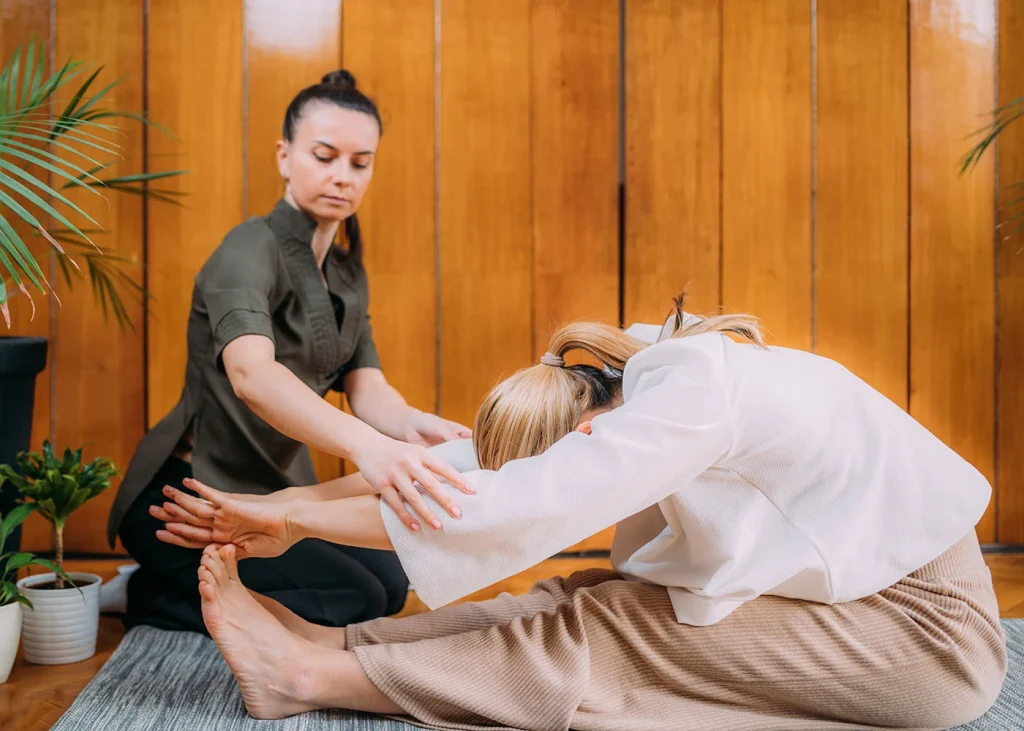
Yoga therapy is a structured clinical approach to using yoga postures (asana), pranayama (breathing), and mindfulness as part of a comprehensive treatment approach for addiction. Yoga therapy is not a standard yoga class; it is facilitated by someone who is educated in both yoga and addiction or mental health, and is intended to focus on the specific emotional, physical, and neurological effects of drugs and alcohol on the mind and body.[1]
Yoga therapy is effective for people at all stages of recovery, even for those who have never practiced it before. Yoga therapy is offered in a group setting in the treatment facility and incorporated into the weekly treatment schedule alongside individual therapy, group therapy, cognitive-behavioral therapy (CBT), dialectical behavior therapy (DBT), and other evidence-based practices. The yoga class is designed to accommodate all levels of experience and to match the client’s current situation.
At All In Solutions, yoga therapy is one part of the holistic treatment approach for addiction that encompasses the whole person, not just the diagnosis or symptom.
How Yoga Therapy Works in Addiction Recovery
The Mind-Body Connection in Substance Use
The relationship between the mind and body when using drugs or alcohol is an ongoing and connected cycle. Chronic alcohol or drug use negatively impacts the nervous system in measurable ways: it dysregulates the stress response, diminishes important neurotransmitters, disrupts sleep patterns, and creates physical patterns of tension and hyperarousal that remain well into early recovery.[2] The practice of yoga has a direct effect on addressing the effects of drug and alcohol dependence through three related means: movement, breath, and mindfulness.
Regulating the Stress Response
One benefit of yoga therapy that continues to be researched and investigated is its role in regulating the stress response. When the body is stressed, it activates the sympathetic nervous system, causing elevated heart rate and blood pressure and higher levels of cortisol (stress hormone) and adrenaline. The chronic use of drugs or alcohol creates an imbalance in this system, and withdrawal after drug and alcohol dependence often results in a full activation of the stress response.
Regular yoga practice reduces levels of cortisol in the body and activates the parasympathetic nervous system, which is your body’s natural way of regulating stress.[3] The change in the nervous system due to practicing yoga is not just psychological; it is physiological as well.
Boosting GABA Naturally
According to a study published in the Journal of Alternative and Complementary Medicine, yoga practice was demonstrated to increase levels of gamma-aminobutyric acid (GABA), the brain’s primary inhibitory neurotransmitter and natural tranquilizer.[4] GABA contributes to regulating anxiety, stress, and mood. Many substances, such as alcohol and benzodiazepines, augment GABA artificially, creating significant instability when discontinuing their use. Practicing yoga is an all-natural, evidence-based recovery technique that restores GABA to reduce anxiety and regulate emotions without drugs or other pharmaceutical interventions.
Breathing Techniques and Craving Management
Pranayama (yogic controlled breathing) is one of the most helpful and immediately applicable yogic techniques. Breathing techniques stimulate the parasympathetic nervous system, slow heart rate, and interrupt physical arousal that precedes relapse.[5] Studies show that yoga and breathing-based and mindfulness practices used in recovery programs have been associated with improvements in quality of life and overall well-being. [6] Clients are taught how to use breathwork not only during therapy but on an as-needed basis whenever cravings or strong emotions arise.
Physical Postures and Body Awareness
The physical practice of hatha yoga, especially beginner-friendly sequencing, restores the mind-body connection distorted by chemical addiction. Many people in recovery report that they feel disconnected from their bodies or that they are at war with their bodies. The physical practice of yoga fosters a different relationship with the body, one grounded in attention, self-compassion, and a sense of agency. As clients in recovery develop greater awareness of their bodies, they become more capable of noticing the physical sensations associated with cravings or strong emotions before those sensations reach an escalated level. This awareness translates to skillfully preventing relapse.
Mindfulness and Emotional Regulation
Mindfulness practices are inherent within the practice of yoga. When clients practice yoga, they develop the ability to notice (without judgment) what their bodies and breath are doing in the present moment. This ability to develop non-reactive awareness transforms automatic behaviors associated with stress and cravings into deliberate acts of observing and choosing one’s response. Emotional regulation begins in the yoga studio and is a major contributor to achieving long-term sobriety.
The Efficacy of Yoga Therapy in Addiction Treatment
Research on yoga therapy and substance use disorder recovery continues to accumulate. A study published in the Journal of Clinical Psychiatry confirmed that a mindfulness-based yoga and meditation recovery program was effective in reducing cravings and post-traumatic stress disorder (PTSD) symptom severity compared to standard treatment alone.[7]
Research on yoga treatment for post-traumatic stress, which is often a co-occurring disorder with substance use, demonstrates that treating PTSD with yoga results in significant improvement on both alcohol and drug use disorder identification tests, as well as reducing PTSD symptoms and improving the ability to cope with stress.[8] Given the high incidence of trauma in addiction recovery, the research findings support using yoga to treat PTSD symptoms that co-occur with substance use.
Studies examining the effects of yoga on the body’s response to stress have repeatedly demonstrated a reduction in cortisol production and improvements in heart rate variability and neural changes associated with effective stress regulation.[9] All changes associated with practicing yoga are related to reducing the likelihood of relapse and improving recovery outcomes. Although research on yoga as a solitary form of substance use disorder treatment is ongoing, the findings consistently support the therapeutic benefits achieved by integrating yoga therapy into an evidence-based treatment plan.
What to Expect from Yoga Therapy
Yoga therapy is effective regardless of flexibility, athletic ability, or previous experience.
The first sessions usually focus on:
- Enhancing your awareness of your breath
- Learning basic yoga poses
- Becoming re-acquainted with being at peace in your body
The goal of yoga therapy is to create a safe, non-competitive environment in which you can fully participate. The instructor will allow you to perform the movements at the pace that works best for you. Nothing will be forced, and there are no expectations except for you to be there and participate.
As you develop your yoga practice, your toolkit will develop as well, giving you real-world skills you can use in your recovery.
Examples include:
- The breathing techniques you learn in class can be used in your daily routine
- Becoming more comfortable and confident using mindfulness techniques instead of reacting impulsively
- Using physical postures to manage stress and emotional distress, rather than just as a form of exercise
By the time treatment ends, many clients describe yoga as one of the self-care practices they most want to continue. Because the tools are portable (no equipment, no membership required), yoga offers a recovery support that can be maintained anywhere.
Yoga Therapy at All In Solutions
At All In Solutions, yoga therapy is not treated as an add-on; it is an essential, professionally led part of our holistic approach to treating addiction and mental health. Our yoga instructors are both certified yoga instructors and have worked successfully in recovery with a variety of people, so each session is based on real-world experience and not just on generic wellness.
Yoga therapy is incorporated into individualized treatment plans based on each client’s needs, physical capabilities, and recovery goals. Groups are scheduled bi-weekly and held at the clinical facility, led by a certified yoga instructor with specialized training in recovery.


