

Use 7-OH mitragynine tablets, kratom shots or tianeptine sodium? The 7-OH ban could leave you watching your supply, worried about withdrawal or scared for someone you love. Running out without a plan is when withdrawal gets risky.
You don’t have to figure this out alone. Below is what’s happening with the 7-OH rules, what withdrawal can look like and how to stop with medical support.
What Is 7-OH Mitragynine and How Is It Different From Kratom?
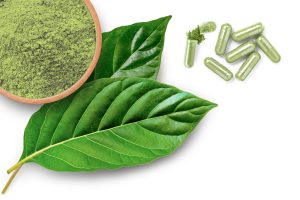
7-OH is short for 7-hydroxymitragynine. It’s a potent alkaloid found naturally in the kratom plant, but only in trace amounts.[2] Manufacturers now sell tablets, shots and extracts with far more 7-OH than kratom leaf naturally contains.
These products bind to the brain’s opioid receptors. One study cited by the FDA found 7-OH about 13 times more potent than morphine.[2] That’s why concentrated products hit harder and lead to physical dependence faster than regular kratom.
The Science Behind the Potency
Kratom contains several psychoactive compounds that act on opioid receptors. In Southeast Asia, people have traditionally chewed or brewed the leaves for pain relief, mood and to ease opioid withdrawal.[3] Mitragynine is the most abundant of these compounds. 7-OH is present in much smaller amounts, but it’s far stronger.
In recent years, companies began selling products with 7-OH levels far above what kratom leaf naturally contains. The FDA sent warning letters to companies marketing these products in 2025.[4] Many are still sold as “kratom” or “natural,” but lab-made concentrates are not the same as traditional leaf.
Concentrated 7-OH acts on mu-opioid receptors, the same receptors targeted by opioids like heroin and fentanyl. These products have been linked to overdose and death. People who use them can develop tolerance, dependence and withdrawal, the same as with other opioids.[5] Some people have needed inpatient medical care to get through 7-OH withdrawal safely.[6]
Where Does the 7-OH Ban Stand Right Now?
On October 14, 2026, the DEA published a notice that it will temporarily place concentrated 7-OH in Schedule I, the same category as heroin.[1] It replaced an earlier notice from July.
- When: The order can be published on or after November 13, 2026. It takes effect that day, with no grace period.
- What it covers: Products with more than 1 mg of 7-OH per gram (or per mL), or with a mitragynine-to-7-OH ratio below 100. Natural kratom leaf usually falls below that line.
- Related compound: In August 2026, the DEA had already placed a related compound, mitragynine pseudoindoxyl, in Schedule I.
Federal and State 7-OH Restrictions
Where you live changes what’s legal today. Here’s where things stand as of October 23, 2026.
| Jurisdiction | Status of concentrated 7-OH |
| Federal (DEA) | Pending. Notice published Oct 14, 2026. Ban can take effect on or after Nov 13, 2026.[1] |
| Florida | Banned. An August 2025 emergency rule made it illegal to sell, possess or distribute concentrated 7-OH.[7] |
| California | Banned for sale. Foods and supplements containing kratom or 7-OH are illegal to sell or make. More than 3,300 products were pulled from shelves in three weeks.[8] |
| New York | Passed Legislature. S8925A bans sales of high-concentration 7-OH products. It takes effect 90 days after it becomes law.[9] |
| New Jersey | No state rule yet. Bill S301 would make 7-OH a Schedule I drug in New Jersey. It cleared a Senate committee in March 2026.[10] |
In New York, the bill targets sellers, not people who possess 7-OH. Florida’s rule covers possession too. Once the DEA’s order takes effect, concentrated 7-OH will be illegal nationwide, whatever your state’s law says.
What Happens If You Stop Taking 7-OH? Withdrawal Symptoms
If you’ve used 7-OH regularly, stopping suddenly can bring on withdrawal that looks a lot like opioid withdrawal. Because 7-OH binds strongly to opioid receptors, your body can come to depend on it. Common symptoms include anxiety, restlessness, cravings, muscle and joint aches, runny nose, watery eyes, yawning, sweating and chills.[11]
In our clinical experience, symptoms often begin within 12 to 24 hours of the last dose. In one published case, a man who stopped a high daily dose of 7-OH was in withdrawal two days later, with nausea, diarrhea, stomach cramps, chills, restlessness and anxiety.[12] The FDA has also reported seizures linked to 7-OH use.[2]
Withdrawal isn’t the only risk. Kratom has been linked to rare but serious liver injury. In a national U.S. registry, people developed jaundice (yellowing of the skin and eyes) about two weeks after they started using kratom, and most needed hospital care. All of them recovered.[13]
The 7-OH Withdrawal Timeline
No timeline fits everyone. Your product, dose and how long you’ve used it all matter. In our clinical experience, many people follow this pattern:
- Days 1 to 3 (acute phase): Symptoms are at their worst. Expect muscle cramps, runny nose, watery eyes, heavy sweating and panic. Many people also have restless legs and stomach cramps.
- Days 4 to 7 (sub-acute phase): The worst of the physical pain starts to fade, but insomnia and deep fatigue often take its place. You may feel depressed or irritable while your brain readjusts.
- Week 2 and beyond (post-acute phase): The physical sickness passes, but cravings, mood swings and sleep problems can linger. Ongoing clinical support helps prevent a return to use.
We often see withdrawal become uncomfortable enough that people go back to using just to make it stop. That’s why having a plan matters.
Worried about what you’ll feel once you stop? Read our guide to kratom withdrawal symptoms to understand what’s happening in your body.
What Are the Safest Ways to Get Off Kratom and 7-OH?
Quitting potent kratom products on your own is hard, and withdrawal is deeply uncomfortable. For many people, medical kratom detox is the safest way to stop. In detox, medical staff watch over you 24/7, keep you safe and can give you medications to ease symptoms.
Buprenorphine has been used successfully to treat 7-OH and kratom withdrawal.[5] Doctors may also use other medications for sleep, anxiety, nausea and aches.[12] Starting buprenorphine takes careful medical timing, so it should only be done under a doctor’s care. Learn more about medication-assisted treatment.
Tell your care team about everything you take. Kratom used with alcohol, opioids, benzodiazepines, stimulants or antidepressants is linked to more hospital stays and serious outcomes. Most kratom-related deaths reported to U.S. poison centers involved more than one substance.[3]
Medically Supervised Detox and Therapy
Detox clears the substance from your body, but recovery is more than that. Therapy helps you understand why you started using and build new ways to cope. A structured setting away from triggers and stress gives that work room to start. We offer a full continuum of care for kratom addiction, so you’re supported at every step.
- Medical detox and residential care: 24/7 medical supervision to manage withdrawal safely, at our West Palm Beach, Simi Valley and Reseda locations.
- PHP and IOP: Once you’re stable, you can step down to partial hospitalization or intensive outpatient care at our Boynton Beach, Cherry Hill and Simi Valley centers.
What Is Tianeptine Sodium and Why Is It Dangerous?
When kratom products are banned or hard to find, some people turn to tianeptine. Tianeptine is an antidepressant in some countries, but it isn’t approved for any use in the U.S. Products sold as “tianeptine sodium” often show up at gas stations next to kratom, and it’s been called “gas station heroin.” Brand names include Zaza, Tianaa, Neptune’s Fix, Pegasus and TD Red.[14]
The FDA describes tianeptine as a full mu-opioid receptor agonist, which means it acts like an opioid.[14] Tianeptine isn’t a federally controlled substance, and state laws vary. That doesn’t make it legal to sell. The FDA says tianeptine isn’t an approved drug or a lawful dietary supplement ingredient, and it has warned companies and blocked imports.[14]
What Does Tianeptine Withdrawal Feel Like?
Stopping tianeptine suddenly can cause withdrawal similar to opioid withdrawal, including cravings, sweating, diarrhea and muscle aches.[14] Switching from 7-OH to tianeptine just trades one dependence for another. Learn more on our tianeptine (gas station heroin) page.
Help for Kratom Addiction Starts Here
If you’re afraid of running out of 7-OH, kratom shots or tianeptine sodium, you’re not alone. About 1.7 million people in the U.S. used kratom in 2021.[15] Worrying about running out can be a sign of dependence.
Reach out now, especially if withdrawal or cravings are getting hard to manage. Our admissions team can talk through what you’re using, what withdrawal might look like and what your next step could be. Many of us have been where you are.