


The crash is one of the hardest parts of quitting cocaine. Cravings, exhaustion and low mood can make using again feel like the only way to feel okay. It isn’t, and you don’t have to get through it alone. Here’s what cocaine withdrawal looks like, how long it lasts, and when to get help right away.
If you’re having thoughts of suicide, call or text 988 any time. If you’re in immediate danger, call 911. Severe low mood is one of the biggest risks during a cocaine crash.
What Is Cocaine Withdrawal?
Yes, cocaine causes withdrawal. Regular use floods the brain with dopamine, the chemical behind pleasure and motivation. When you stop, levels drop below normal for a while, and your mood, energy and sleep crash with them. Withdrawal can start even while some cocaine is still in your blood.
Cocaine Withdrawal Symptoms List
The most common cocaine withdrawal symptoms are:
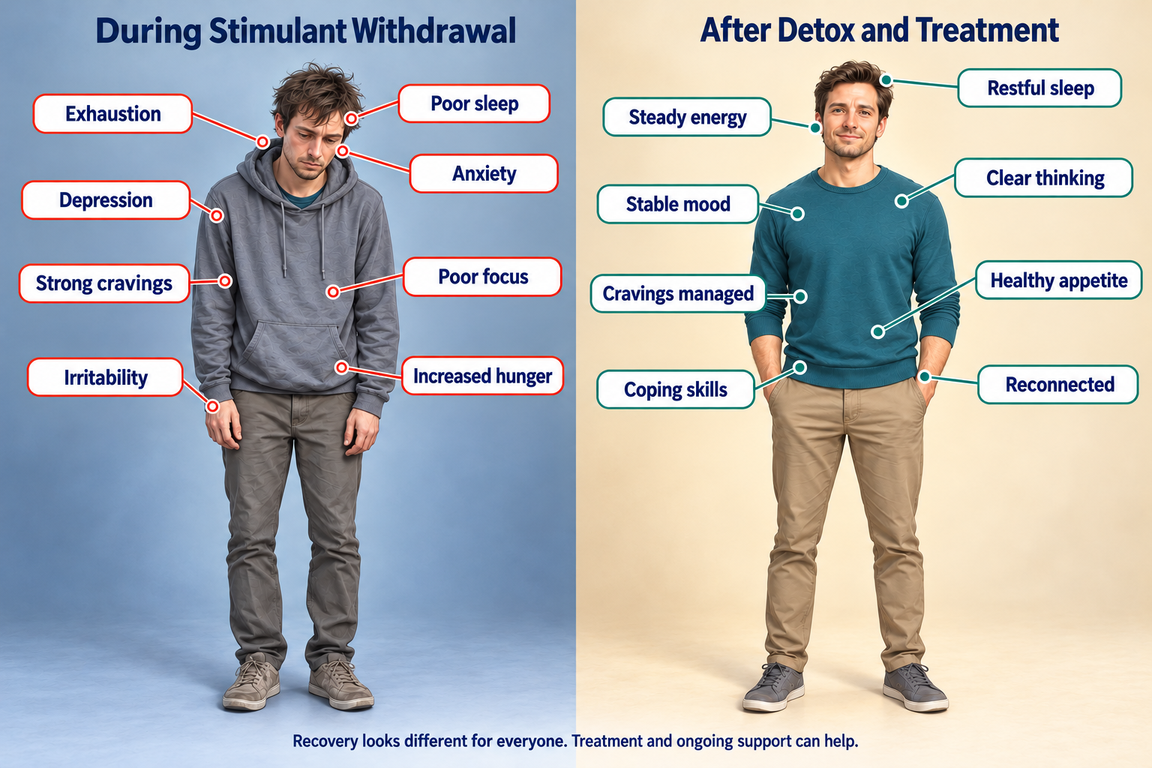
- Exhaustion and low energy
- Depressed mood
- Strong cravings for cocaine
- Irritability or agitation
- Anxiety or paranoia
- Increased appetite
- Sleeping too much, or not being able to sleep
- Vivid, unpleasant dreams
- Slowed thinking and movement
- Losing interest in things you used to enjoy (anhedonia)
Unlike alcohol or opioid withdrawal, cocaine withdrawal usually doesn’t cause vomiting or shaking. Some people do report aches, chills or restlessness.
| Category | Symptoms |
|---|---|
| Mood | Depression, irritability, anxiety, paranoia, apathy |
| Body | Exhaustion, heavy or restless feeling, increased appetite, aches |
| Sleep | Insomnia, sleeping too much, vivid nightmares |
| Thinking | Poor focus, slowed thinking, memory problems, cravings |
The Cocaine Crash (Comedown)
The crash starts within hours of your last dose, especially after a binge. You’ll feel drained, low and irritable. You may sleep for long stretches, yet still wake up exhausted. Cravings can be intense, because using again seems like the fastest way to feel normal.
Cocaine Withdrawal Timeline
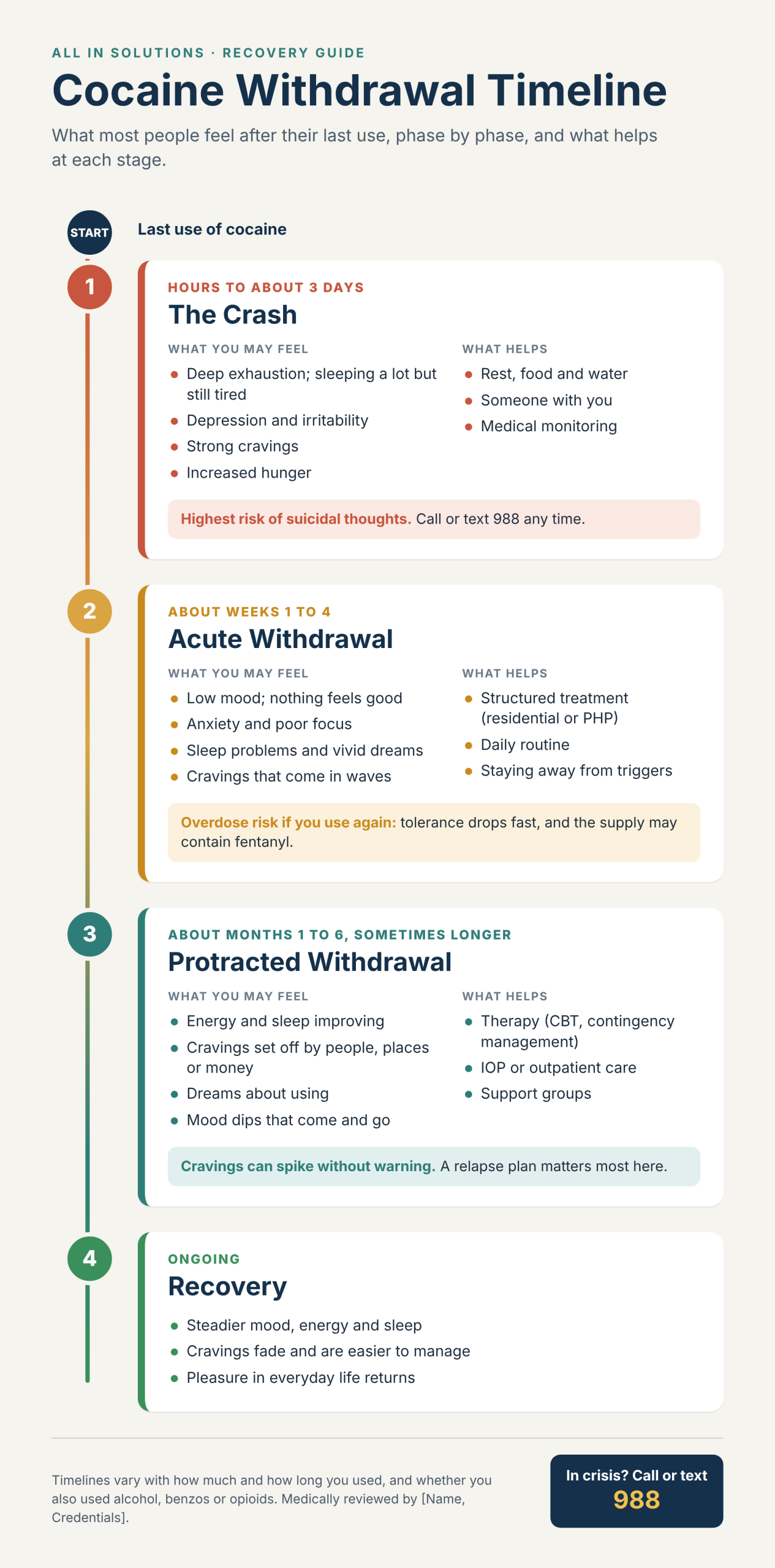
How long withdrawal lasts depends on how much you used, how long, and whether you mixed it with other substances. Most people go through three phases[1].
Phase 1: The crash (hours to about 3 days). Exhaustion, low mood, irritability, hunger and long sleep, yet you still feel tired. Suicidal thoughts are most likely in this phase.
Phase 2: Acute withdrawal (about weeks 1–4). Your body starts to settle, but mood stays low. Cravings, poor focus, anxiety and loss of pleasure are common. Relapse risk is high.
Phase 3: Protracted withdrawal (months 1–6 or longer). Energy comes back, but cravings, low mood and dreams about using can return without warning. Research funded by the National Institute on Drug Abuse (NIDA) found that the brain’s response to cocaine cues (people, places, paraphernalia) was strongest at 1 and 6 months of abstinence, even as people reported feeling fewer cravings.[2] You can feel past the worst of it and still be most vulnerable to triggers. That’s why therapy matters most in this phase.
What Changes Your Timeline
| Factor | Effect |
|---|---|
| How much and how often you used | Heavier, more frequent use usually means a harder, longer crash |
| How long you’ve used | Years of use can stretch out low mood and cravings |
| Smoking (crack) vs. snorting | Smoking brings a faster, sharper crash |
| Alcohol, benzos or opioids too | Adds that drug’s own withdrawal, which can be medically dangerous |
| Depression, anxiety or trauma history | Can deepen and lengthen low mood |
| Sleep, food and support | Rest, meals and people around you make it easier |
Crack vs. Powder Cocaine Withdrawal
Crack and powder cocaine are the same drug. Snorted powder peaks in a few minutes and lasts 15 to 30 minutes.[3] Smoked crack reaches the brain in seconds, and its high lasts only 5 to 10 minutes.[3] That’s why crack is often used in binges, and why its crash hits faster. The symptoms and the timeline are otherwise the same.
Is Cocaine Withdrawal Dangerous?
It can be, but the danger is mostly mental, not physical. These are the main risks:
- Suicidal thoughts. Deep depression during the crash is the biggest immediate risk.[4]
- Overdose if you use again. Tolerance drops quickly. A dose that used to feel normal can be too much after a break. The street supply is also often contaminated: opioids were involved in about 79% of cocaine overdose deaths in 2021.[5]
- Other substances. If you also drink heavily or take benzos, stopping those suddenly can cause seizures. This is the main reason to detox under medical care.
- Psychosis. Severe paranoia or hallucinations are rare. They’re most likely during or right after a heavy binge.
When to Get Help Right Away
| What you notice | What to do |
|---|---|
| Thoughts of suicide or self-harm | Call or text 988 now. Call 911 if you’re in immediate danger. |
| Chest pain, trouble breathing, a seizure, fainting or confusion | Call 911 |
| Seeing or hearing things that aren’t there, or severe paranoia | Call 911 or go to the ER |
| You also drink daily or take benzos or opioids | Call our admissions team about medical detox |
| You can’t sleep or eat for days, or the cravings feel unbeatable | Call our admissions team |
| Tired, low and irritable, with cravings you can ride out | Lean on support, keep away from triggers, and talk to a provider |
How Cocaine Withdrawal Compares
| Cocaine | Alcohol | Opioids | |
|---|---|---|---|
| Visible physical symptoms | Few | Shaking, sweating, possible seizures | Vomiting, diarrhea, aches, sweating |
| Is withdrawal itself life-threatening? | Rarely. The main risks are suicide and overdose | Yes, it can be | Rarely, but overdose risk rises afterward |
| FDA-approved withdrawal medication | None | Yes | Yes |
What Helps During Cocaine Withdrawal
There’s no FDA-approved medication for cocaine withdrawal, and no substitute drug that takes cravings away. In cocaine detox, care focuses on keeping you safe and comfortable:
- 24/7 monitoring of vital signs and mood
- Short-term medication for sleep or anxiety when needed
- Regular meals, fluids and rest
- Psychiatric support if depression or suicidal thoughts show up
Once you’re stable, therapy does the long-term work. Cognitive behavioral therapy (CBT) helps you spot triggers and handle cravings. Contingency management, which gives small rewards for drug-free tests, is one of the best-studied treatments for stimulant addiction.[6]
Where We Treat Cocaine Addiction
All In Solutions offers the full continuum of care:
- Medical detox and residential care: West Palm Beach, Reseda and Simi Valley
- PHP and IOP: Boynton Beach, Cherry Hill and Simi Valley
Staying through every level of care gives your brain time to heal while you build the skills that prevent relapse.
Take the Next Step
You don’t have to be sure about anything yet. Call and ask. We’ll answer your questions, check your insurance, and talk through what detox and treatment could look like for you.
Call Admissions Now